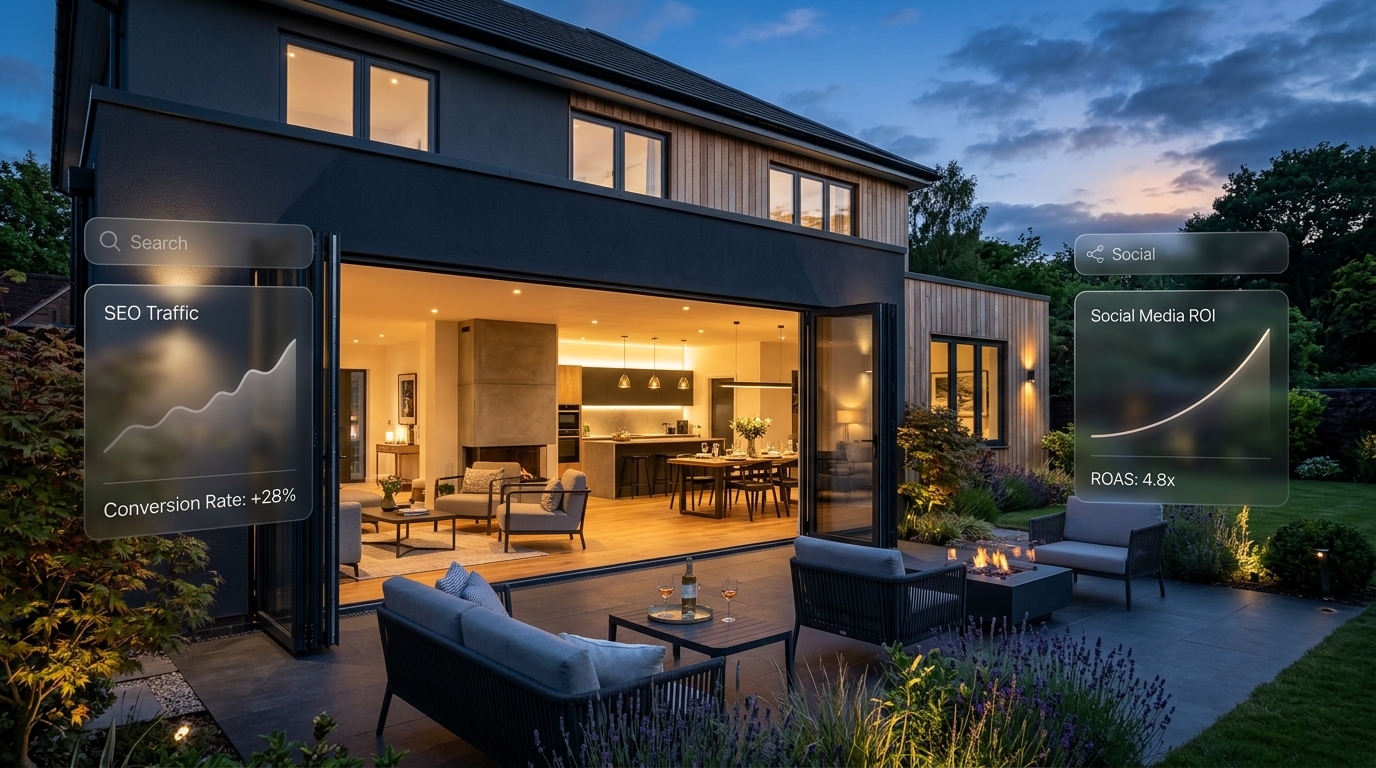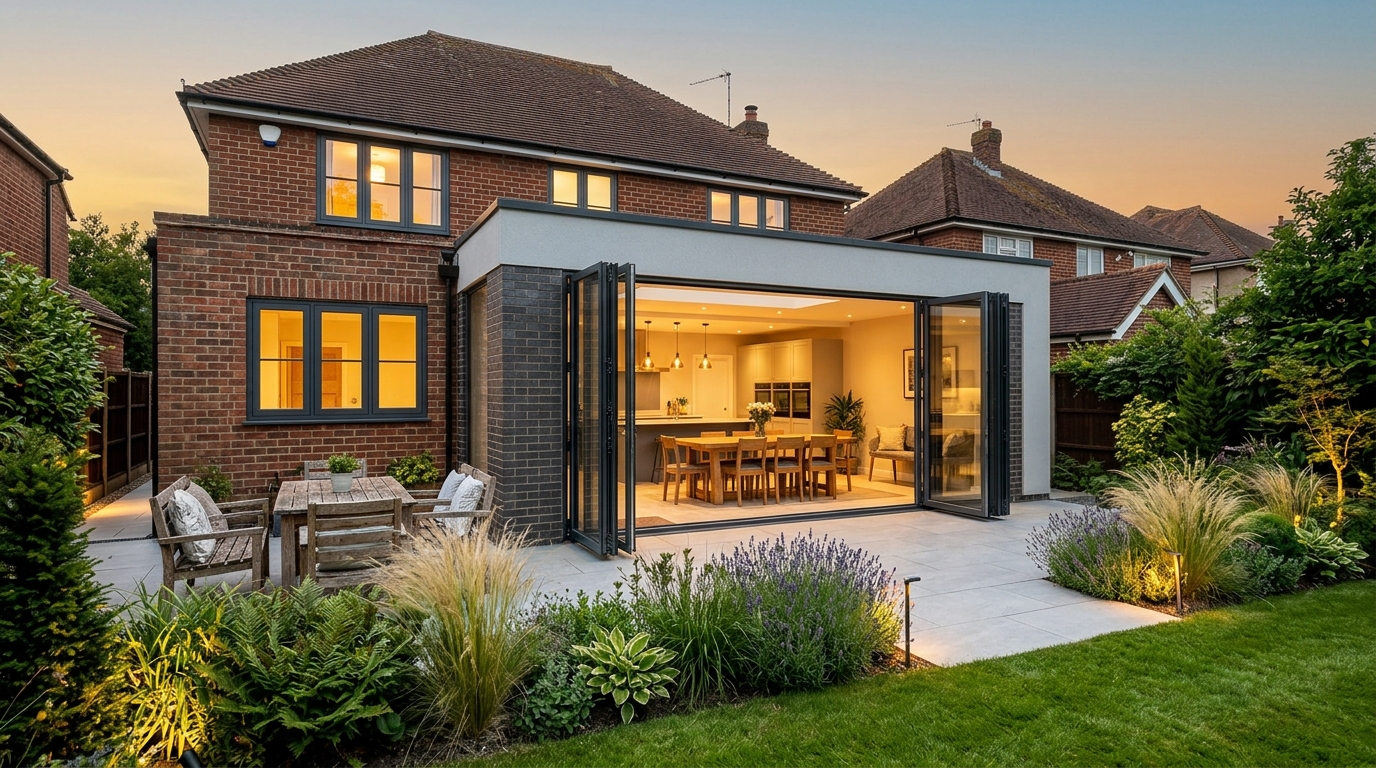

Most UK glazing companies spend thousands of pounds every month driving traffic from Google Ads and Meta campaigns, only to send those hard-won clicks straight to a cluttered homepage. Purpose-built window installer landing pages fix this conversion leak immediately, turning browsers into qualified homeowners ready to book an in-home survey.
Thank you for reading this post, don't forget to subscribe!When a homeowner searches for “aluminium bifold doors near me” or “heritage flush sash windows in Surrey”, they are in an active buying mindset. Yet within three seconds of landing on a generic homepage—packed with competing product menus and vague “Contact Us” links—they lose momentum and click back to a competitor.
In this conversion rate optimisation (CRO) playbook for UK window, door, and conservatory contractors, we examine why standard websites underperform on paid traffic, outline the seven essential elements of high-converting window installer landing pages, and show how to keep your surveyors booked weeks ahead.
💡 Pro-Tip: The Fenestration Conversion Benchmark
Across Advertomedia’s campaign audits for UK glazing installers, standard brochure homepages convert paid search clicks into enquiries at an average of just 1.8% to 2.4%. Switching that exact same ad spend to dedicated, single-product landing pages routinely lifts conversion rates to 5.5% to 8.2%—more than doubling in-home survey bookings without increasing your monthly ad budget.
Why Sending Paid Traffic to Your Homepage Kills Survey Bookings
Your company homepage has an impossible job. It must introduce your business, showcase every product range from uPVC casements to tiled conservatory roofs, display finance partners, host recruitment links, and direct returning customers to aftercare support. While that broad navigation works adequately for organic brand searches, it is fatal for conversion-focused advertising.
Sending paid clicks to a general homepage creates three immediate commercial bottlenecks:
- Broken Message Match: If a homeowner clicks an advert promising slimline anthracite aluminium sliding doors and lands on a generic banner reading “Quality Home Improvements Since 1998”, confidence drops instantly. Relevance is the single strongest driver of early scroll engagement.
- Navigation Leakage: Every top-bar menu item—About Us, Gallery, Blog, Trade Enquiries, Showroom Hours—acts as an escape hatch taking prospects away from your survey booking form.
- Mobile Friction: Over 72% of UK homeowner glazing research happens on smartphones during evenings and weekends. Multi-column homepage layouts push calls to action well below the fold, forcing thumbs to hunt for a quote form.
Homepage vs Dedicated Window Installer Landing Pages: Commercial Comparison
To illustrate why specialist glazing marketers separate their campaign landing pages from their main brochure site, compare how each destination performs across key acquisition metrics:
| Conversion Factor | Generic Company Homepage | Dedicated Landing Page |
|---|---|---|
| Primary Objective | Broad brand overview across all ranges | One product, one local area, one survey CTA |
| Message Match | Low (generic headline & mixed imagery) | Exact match to search keyword & ad copy |
| Navigation Distractions | 10–25 outbound menu & footer links | Zero escape links; focus locked on conversion |
| Google Ads Quality Score | Average (higher cost per click) | Above Average (lower CPC & higher rank) |
| Typical Visitor-to-Enquiry Rate | 1.8% – 2.4% | 5.5% – 8.2% |
| Cost Per Booked Survey | £110 – £195+ | £42 – £80 |
The 7 Essential Elements of High-Converting Window Installer Landing Pages
Building effective window installer landing pages does not require flashy animations or gimmicky pop-ups. Homeowners investing £8,000 to £25,000 in architectural glazing want clarity, craftsmanship proof, and reassurance that your surveyors will not subject them to outdated, high-pressure sales tactics. Include these seven elements on every campaign page you launch.
1. Product-Specific Headlines With Immediate Local Proof
Your above-the-fold H1 headline must confirm two things within two seconds: what you install and where you install it. Replace vague slogans with crisp, outcome-led positioning such as: “Bespoke Aluminium Bifold Doors Installed Across Kent & East Sussex”, paired with a sub-headline highlighting 10-year insurance-backed guarantees and free technical home surveys.
2. Authentic UK Installation Photography (Never Manufacturer Stock)
Discerning homeowners immediately recognise glossy European studio renders that bear no resemblance to British brickwork, pebbledash, or Victorian bay facades. Replacing generic manufacturer stock photos with high-resolution photographs of your own completed local projects—showing crisp sightlines, clean silicone finishing, and transformed kerb appeal—regularly lifts form submissions by 25% or more.
3. A Frictionless Multi-Step Survey Booking Form
Standard single-column forms asking for Name, Email, Phone Number, Address, and Project Notes feel intimidating on a mobile screen. Instead, use a clean three-step micro-survey positioned above the fold:
- Step 1 – Project Scope: Simple clickable tiles asking what the homeowner needs (e.g. Flush Sash Windows, Aluminium Bifolds, Composite Door) and approximate quantity (1–3, 4–8, or Full House).
- Step 2 – Postcode Check: A quick postcode field confirming that your fitting teams cover their street, which simultaneously filters out-of-area enquiries.
- Step 3 – Survey Details: Name, phone number, email, and preferred survey slot (Weekday Daytime, Evening, or Saturday Morning).
Because the first click requires zero personal details, prospects commit psychologically to completing the remaining steps—resulting in higher enquiry volume and far richer project data before your office picks up the phone.
4. Credible Fenestration Accreditations Above the Fold
Trust badges only work when placed directly underneath your hero call-to-action button, not buried in the footer. Display your FENSA or CERTASS registration, live Google Reviews score (e.g. 4.9★ from 280+ local installations), Secured by Design PAS 24 credentials, and Which? Trusted Traders membership.
5. Transparent Pricing Anchors & No-Pressure Promises
The UK double glazing sector still faces homeowner scepticism around marathon kitchen-table sales pitches. Address that objection head-on with a concise “What Happens at Your Survey” timeline: exact laser measurements, physical colour samples, and a written fixed-price quote valid for 30 days with zero obligation.
6. Technical Specifications Translated Into Homeowner Benefits
Avoid dumping raw datasheets onto the page. Pair technical credibility with plain-English benefits: explain how 1.2 W/m²K thermally broken aluminium frames eliminate draughts, how acoustic laminated glass dampens traffic noise, and how Part L Building Regulations compliance protects property value.
7. Mobile-First Sticky Call & Survey Bar
On mobile screens, fix a dual-action bar at the bottom of the viewport featuring “Book Free Survey” beside a tap-to-call “Call Showroom” button. Homeowners browsing project galleries halfway down the page never have to scroll back up to enquire.
⏱️ Pro-Tip: Protect Conversion Momentum With the 15-Minute Speed-to-Survey Rule
Even the finest window installer landing pages lose deals if enquiries sit unanswered overnight. Trigger an automated SMS and email confirmation naming the surveyor who will call, and ensure your office phones new leads within 15 minutes during showroom hours. Rapid response routinely lifts survey booking rates by a further 35%.
Structuring Your Glazing Landing Page Architecture
Rather than cramming every product onto a single campaign URL, mirror your highest-margin installation categories with dedicated landing page templates. For most UK glazing companies, four core pages capture 85% of profitable search demand:
- Aluminium Bifold & Sliding Patio Doors: High average order values (£6,000–£18,000+), driven heavily by kitchen extensions and visual before-and-after photography.
- Heritage Flush Sash & Timber-Alternative Windows: Tailored to period cottages, conservation areas, and affluent detached properties seeking authentic woodgrain aesthetics without timber maintenance.
- Composite & Architectural Entrance Doors: High-velocity kerb-appeal upgrades ideal for filling shorter fitting gaps between major whole-house window contracts.
- Solid & Tiled Conservatory Roof Conversions: Seasonal problem-solving enquiries from homeowners tired of conservatories that are freezing in January and unbearable in July.
Keep paid-only split-test variants set to noindex so they never compete with your organic regional SEO service pages, and connect every form submission to Google Analytics 4 enhanced conversions and offline CRM tracking so Google’s Smart Bidding optimises for signed contracts rather than just cheap clicks.
Frequently Asked Questions
What is a good conversion rate for window installer landing pages?
For high-intent Google Search traffic, well-optimised window installer landing pages typically convert between 5% and 8% of visitors into qualified survey enquiries, with top-performing local campaigns occasionally reaching 10%. If your current pages convert below 3%, review your message match, mobile speed, and form friction immediately.
Should we display prices on our window and door landing pages?
Yes—displaying realistic “prices from” guide ranges (for example, guide pricing per linear metre on aluminium bifolds or starting figures for installed composite doors) builds trust and pre-qualifies budget expectations. Homeowners appreciate transparency and are far less likely to cancel an in-home survey once they understand typical investment levels.
How many form fields should we include on an in-home survey booking form?
Aim for three to five essential details split across a progressive two- or three-step flow: product interest, approximate number of apertures, postcode, and contact information. Requiring full street addresses or detailed window measurements upfront creates unnecessary drop-off on mobile devices.
Do we need a separate landing page for every glazing product?
You do not need separate pages for minor glass options, but you should create distinct landing pages for each major product family you actively promote in paid ads—such as flush sash windows, aluminium bifold doors, composite doors, and replacement conservatory roofs. Matching each ad group to its exact product page boosts Quality Score and lowers cost per click.
Should our Google Business Profile link to a dedicated landing page or our homepage?
For single-showroom glazing companies, linking your Google Business Profile to your homepage (or a dedicated primary showroom page) is usually best for organic Local Pack authority, while keeping product-specific landing pages reserved for Google Ads, Meta campaigns, and targeted regional SEO hubs.
Ready to Turn More Website Clicks Into Booked Window Surveys?
Advertomedia specialises exclusively in conversion-focused web design, Google Ads, and local SEO for UK window, door, and conservatory installers. Request a complimentary landing page & funnel audit today.